

NEW: The Parenting Toolbox Resource Store
Reading about change is easy. Putting it into practice is harder.
That’s why I’ve opened the Parenting Toolbox Resource Store. Every kit and guide is designed to make that next step easier—with practical examples, words to try and simple activities that help you use the ideas you’ve read about.
Each resource brings everything together in one place, so you can choose manageable change and get started. I’ll regularly add new kits to help you turn useful insights into everyday parenting habits.
Many kits also include an organisational licence, allowing SCHOOLS, CLUBS and WORKPLACES to share these resources with their parents.
Visit the Parenting Toolbox Resource Store and find your starting point.
It’s easy as parents to fall into old habits!
Do you continually ask one child to help because you know they’ll do it?
Another gets a warning before you’ve explained what’s happening.
A third has their bag packed for them because, well, they’re the one who forgets things.
These responses can become so familiar that we barely notice them. We’re drawing on experience, trying to keep family life moving.
Yet each habitual response can also renew an unwritten job description.
You’re the responsible one.
You’re the one we expect to have trouble.
You’re the one who needs us.
Nobody advertised these positions. There was no interview. But children can find themselves appointed to family roles surprisingly early—and some spend years trying to get a transfer.
How children get the role
Family roles usually begin with something real.
One child readily cooperates. Another reacts strongly to change. A younger child needs more help than their siblings. A quick learner attracts plenty of praise.
Parents respond to what they see. That makes sense.
Over time, however, a response to a particular behaviour can become an expectation about the whole child.
“She’s having trouble getting organised” becomes “She’s our disorganised one.”
“He argued about that” becomes “He argues about everything.”
You may have learned it from your parents or family of origin.
Roles are also birth order-related, as firstborns often wear the responsible tag and youngest are forever the baby of the family, or at least the one you expect less of.
Labels stick and are difficult to shift.
Once an expectation settles in, it can begin directing your attention.
You notice the forgotten lunchbox more readily than the three mornings a child remembered it. You brace for an argument before they’ve had a chance to agree.
Children pick up on these expectations through your words, your tone and the responsibilities you offer—or withhold.
Some resist the role. Others settle into it.
Either way, it becomes hard for you to see what’s changing when yopur in the parenting trenches.
The Responsible Child: always on duty
Every family appreciates a child who willingly helps.
It’s usually the eldest child's domain. Definitely so, if the firstborn is a girl.
They bring in the washing, make room for a younger sibling and respond when asked. On a tiring day, it’s natural to turn to the child who makes things easier.
“Can you help your brother?”
“Would you get that for me?”
“Just let her have a turn. You understand.”
Gradually, being capable can come with an extra workload. Being reasonable can mean being expected to give way.
It’s wearing being the good kid - the child that parents rely upon all the time.
The reliable child still needs room to be tired, annoyed, absorbed in their own interests or simply unwilling to help at that moment. They shouldn’t have to be the easiest person in the family to remain valued.
Revise the job description by sharing the load.
Before asking the usual child, pause. Who else could do this? Who needs practice?
If a younger sibling needs help packing away, you might say, “I’ll help you get started. Your sister is busy with her own things.”
Keep reasonable contributions on the reliable child’s roster. Just check that their competence hasn’t made them permanently available.
The Difficult Child: trouble expected
Some kids let you know exactly how they feel.
They question a decision, react loudly to disappointment or need more help moving from one activity to another. Parenting them is tiring, particularly when you’re already stretched.
After enough difficult encounters, anticipation takes over.
“Don’t start.”
“I knew you’d make a fuss.”
“Why does everything have to be an argument?”
Sometimes we warn before the child has done anything. We’re responding to the last ten occasions as much as the one in front of us.
That can leave a child with little room to surprise us.
Revise the job description by giving the next interaction a fresh start.
Suppose leaving the park usually causes trouble. Make the expectation clear without predicting the response.
“We’re leaving in five minutes. Would you like one more go on the slide or the swings?”
When it’s time, follow through calmly. They will probably still protest and need help leaving. A fresh start doesn’t guarantee a smooth finish. Besides, they test you out to see if you really mean what you say.
But when they do manage it—even reluctantly—let that register.
“You wanted to stay, and you came when it was time.”
You’re helping both of you notice that the familiar pattern isn’t the only possible one.
The Clever Child: expected to know
“The clever one” sounds like a great position.
It often comes with pride, encouragement and plenty of attention. It can also carry an expectation that learning should come easily.
What happens when the maths gets harder? When another child knows more? When the first attempt is decidedly ordinary?
They are ripe for developing perfectionism, avoiding tasks where they can’t easily excel.
Revise the job description by making room for being a beginner.
When your child struggles, resist the reassuring, “You’re clever. You’ll get it.”
Sit beside the difficulty.
“This is new. Show me where you’re getting stuck.”
Help them find a manageable next step, whether that means trying another approach, practising a small part or asking their teacher for help.
They can remain a capable learner while having something to learn. Home is a good place to make that experience ordinary.
The Needy Child: permanently in training
It’s easy to keep doing something for a child long after the original reason has passed.
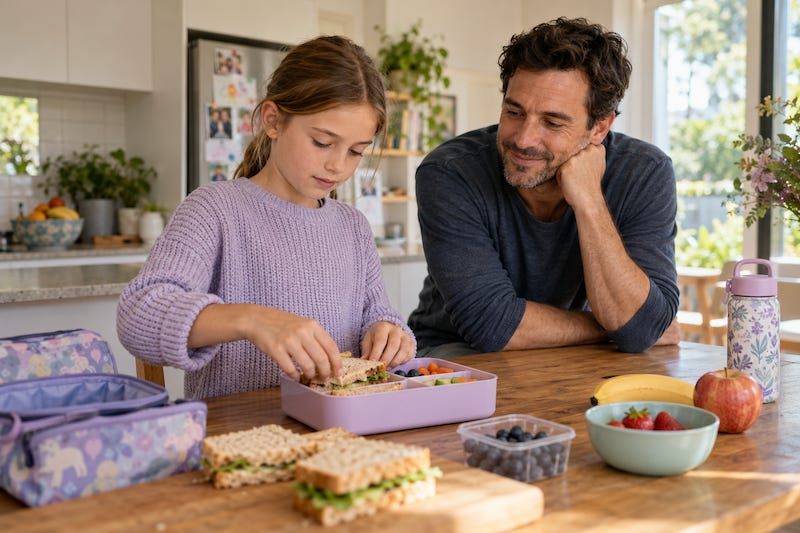
You still order their meal because they were once shy. You pack their bag because they used to forget things. You answer questions directed at them because they sometimes took a while to respond.
Helping becomes automatic. You may never notice the moment you stop to ask whether it’s still needed.
Meanwhile, the child gets fewer chances to show you what they can now do.
Then you discover you’ve loved them helplessly.
Revise the job description by checking before stepping in.
Choose one familiar task and ask yourself: Which part could they manage now?
At a café, you might look at the menu together, help your child decide what to say, then give them time to order.
If they hesitate, stay alongside them.
“Would you like to tell them, or shall we say it together?”
The amount of support will differ from child to child. Some children need continuing help or adjustments. Keep that support responsive to the child’s present needs, with room for their growing skills to become visible.
Even the flattering roles need a review
Families have plenty of other positions: the sporty one, the shy one, the funny one, the easygoing one.
Each may describe something you recognise and enjoy about your child. There’s no need to become anxious about every affectionate description.
The useful question is whether the role leaves them room to move.
Can the sporty child lose interest in footy? Can the funny child be taken seriously? Can the easygoing child object? Can the shy child become more confident without everyone making a fuss?
Children need to know that belonging in the family doesn’t depend on continuing to perform a familiar part.
They simply belong.
Make one small revision
You don’t need to announce a family restructure over dinner.
Start by noticing one expectation you carry about one child. Listen for the sentence that comes quickly to mind: She always… He never… That’s just what they’re like.
Then change one response.
Ask someone else to help. Give a clear instruction without the warning. Sit comfortably beside a struggle. Wait before taking over.
Your child may continue behaving much as they did yesterday. Give the change some time. Familiar roles can feel comfortable, even when they’ve become restrictive.
And when you notice something different, describe it simply. There’s no need to award a new title.
“You remembered everything you needed.”
“You told me you disagreed without shouting.”
“You asked for help when you got stuck.”
We spend years getting to know our children. Part of that work is staying curious enough to meet the person they’re becoming.
They may already be ready for a new job description.
We need to leave the position open.
Put a fresh start into practice
Recognising a familiar family role is one thing. Responding differently when you’re tired or busy takes practice.
Beyond the Labels, my companion mini-kit, makes change manageable. It includes everyday examples, words to try, reflection pages and a responsibility handover worksheet. You can find it in the Parenting Toolbox Store.
If this made you think of the roles kids fall into in your family, pass it on to a parent who might recognise a few in theirs.
It’s easy to share.
"Nobody advertised these positions. There was no interview." I laughed and then I had to sit still for a minute, because that is exactly how it happens. When I was growing up I was called "your mother's daughter," and nobody ever asked if I wanted that job. It took me years to see that a label like that can steer how the adults around you see you, the way you describe with the forgotten lunchbox getting noticed more than the three mornings it was remembered. Now that I'm raising my own kids, your line about leaving the position open is the one I want on my fridge. Which role do you see parents miss most often in their own homes?