

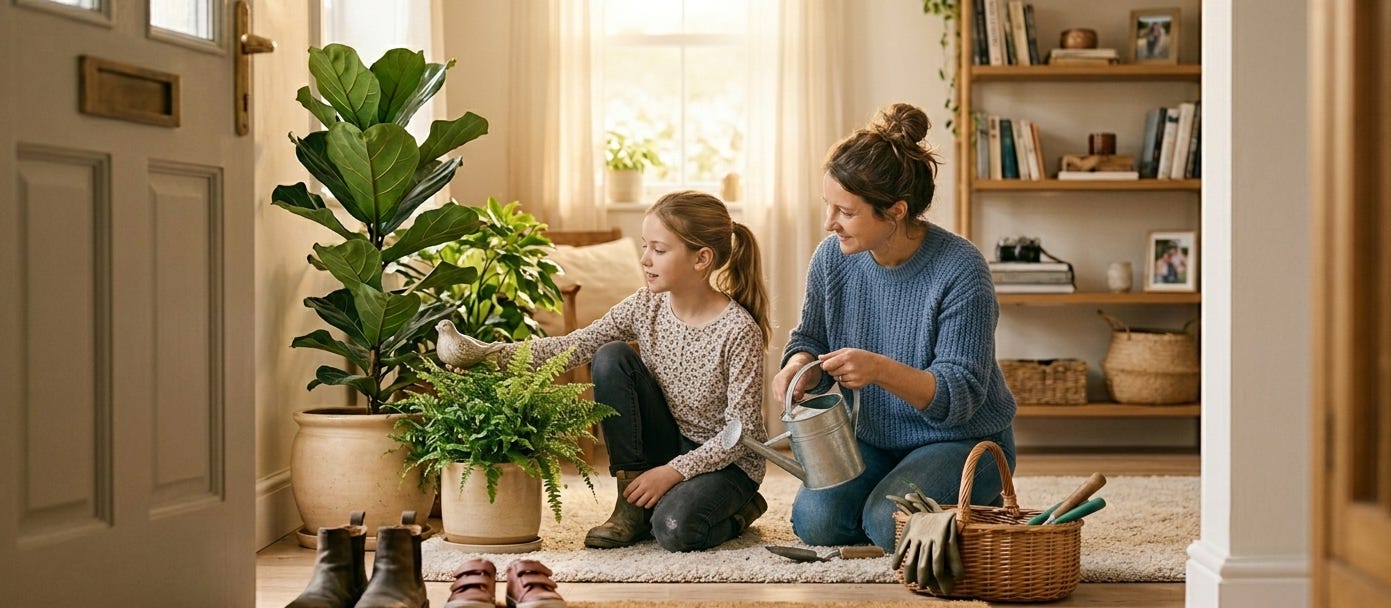
Imagine stepping into your home and instantly feeling a sense of calm, connection, and cooperation.
Great parenting isn’t an elusive talent; it is a dynamic set of practical, learnable skills, including positive discipline, overcoming power struggles and building resilience.
Backed by cutting-edge neuroscience and developmental psychology, these ten essential parenting skills are your roadmap to moving past daily power struggles and building a deeply resilient family.
1. Active Listening
Active listening is the cornerstone of psychological safety in families.
The Gottman Institute demonstrates that validation through listening is a primary driver of secure attachment.
When you master this as a parent, your child feels emotionally safe, which boosts self-esteem and reduces anxiety.
This deep level of attention signals to a child that their thoughts and feelings genuinely matter, creating a strong foundation for lifelong open communication.
Expert Tip: Use the Get Low and Repeat rule. Physically drop to your child’s eye level. Before offering advice, paraphrase their feelings: “It sounds like you felt really left out at lunchtime today, is that right?”
2. Emotion Coaching
Emotion coaching involves leaning into a child’s feelings rather than dismissing them.
And yes, I’m a fan. Have been for decades.
Dr John Gottman’s research found that children of emotion-coaching parents are more resilient and possess stronger social skills.
It fosters high emotional intelligence by teaching kids that all emotions are acceptable. Emotions aren’t good or bad.
They’re comfortable or uncomfortable.
By learning to name their feelings, children gain the vital self-awareness needed to navigate complex interpersonal relationships later in life.
Expert Tip: Separate the emotion from the behaviour during a meltdown: “It is okay to feel angry that the tower fell. It is not okay to throw your toys.”
3. Consistent Boundaries
Children thrive when they know where the lines are drawn. As boring as it may sound, kids like the predictability of routines, rituals and rules. That doesn’t mean that they won’t push them, but that’s an article for another day.
Developmental psychologist Diana Baumrind maintains that Authoritative parenting—balancing high warmth with clear, firm boundaries—yields the most socially competent individuals. Limits provide a safety fence that lowers baseline anxiety.
When boundaries are predictable, children spend less energy testing limits and more energy focusing on positive growth and learning.
Expert Tip: Establish boundaries during calm moments. Sit down during a relaxed time to clearly outline family rules and the automated consequences that follow.
4. Positive Discipline
Positive discipline focuses on teaching rather than fear-based punishment.
This approach is strongly supported by extensive research, most notably Australia’s internationally acclaimed Triple P (Positive Parenting Program).
Decades of Triple P research show that proactive discipline significantly reduces childhood behavioural issues while lowering parental stress. It shifts the parental role from a punisher to a supportive guide, helping children understand the natural impact of their choices.
Expert Tip: Shift entirely to immediate, logically related consequences tied to the behaviour. Deliver them calmly: “Because you refused to put on your shoes, we have lost our time to play at the park.”
5. Role Modelling
Kids are natural mimics.
They’re hardwired to copy what parents do long before they follow what we say.
Albert Bandura’s Social Learning Theory shows that children constantly mirror the actions and stress responses of caregivers, internalising their coping mechanisms.
Your daily lifestyle, reactions to stress, and ways of treating others form the invisible blueprint from which your children build their own character.
Expert Tip: Practice narrative self-regulation aloud so they hear the process: “I’m feeling really frustrated by this traffic right now, so I’m going to take two deep breaths to help myself calm down.”
6. Encouraging Independence
Fostering autonomy is vital. It’s the best parenting game in town.
Self-Determination Theory emphasises that autonomy is a core psychological need.
Overparenting correlates with higher anxiety and lower self-efficacy in young adults, whereas encouraging independence builds genuine resilience.
Allowing children to navigate small, safe failures gives them the confidence required to tackle major life challenges independently.
Expert Tip: Make it your guiding parenting principle— never do for a child what they can do themselves—whether it is packing a school bag or pouring cereal. Step back and let them try.
7. Clear, Positive Communication
Linguistic studies indicate that the human brain processes positive directives faster than negative ones.
When a child hears “Don’t,” their brain must first visualise the forbidden act, creating a mental delay and increasing confusion.
Framing instructions positively reduces behavioural friction and helps children clearly understand exactly what is expected of them.
Expert Tip: Replace “Don’t” with action-oriented verbs. Instead of “Don’t run inside,” say, “Please use your walking feet.” Instead of “Stop yelling,” use “Please use your indoor voice.”
8. Quality Connection
Groundbreaking research from the Australian Institute of Family Studies (AIFS) highlights that warm parent-child relationships built on regular connection act as a major protective factor for youth mental health.
It fills their emotional tank and reduces attention-seeking behaviours.
Even brief moments of true presence create lasting memories and reinforce a child’s sense of belonging and worth within the family.
Expert Tip: Implement regular, ritualised One-on-one time. Set aside 10 to 15 undistracted, phone-free minutes when the child chooses the activity, and you follow their lead completely.

9. Parent Self-Discipline
An adult’s ability to regulate their own nervous system is a relatively new parenting tool. We’ve always known the value of parental calm, but we underestimated its positive impact on kids’ behaviours and emotional states.
It’s massive.
Dr Dan Siegel introduced the concept of co-regulation, demonstrating that a child’s developing nervous system relies on a calm adult to help it settle.
An escalated adult cannot calm an escalated child.
By mastering your own calm, you provide the stabilising anchor your child needs during their most turbulent moments.
Expert Tip: Use the Pause-and-Press technique. When triggered, press your feet into the floor, take one slow belly breath, and drop your shoulders before speaking.
10. Flexibility and Adaptability
The psychological concept of a Good Fit holds that parenting must align with the child’s unique temperament and changing age to promote optimal psychological health.
This adaptability preserves the parent-child relationship across major transitions, such as adolescence.
Recognising that what worked yesterday might not work today allows you to grow alongside your child with grace and ease.
Expert Tip: Conduct a semiannual parenting audit. Ask yourself: “Does my current parenting style match my child’s current age and temperament, or am I parenting the child they were a year ago?”
Finally
By weaving these science-backed skills into your daily routine, you are setting your children up for a brilliant, confident future!
Change doesn’t happen overnight, so pick just one skill to play with this week, celebrate the small wins, and watch your family thrive.
I really appreciated this and the way you ended this - one thing at at time.