

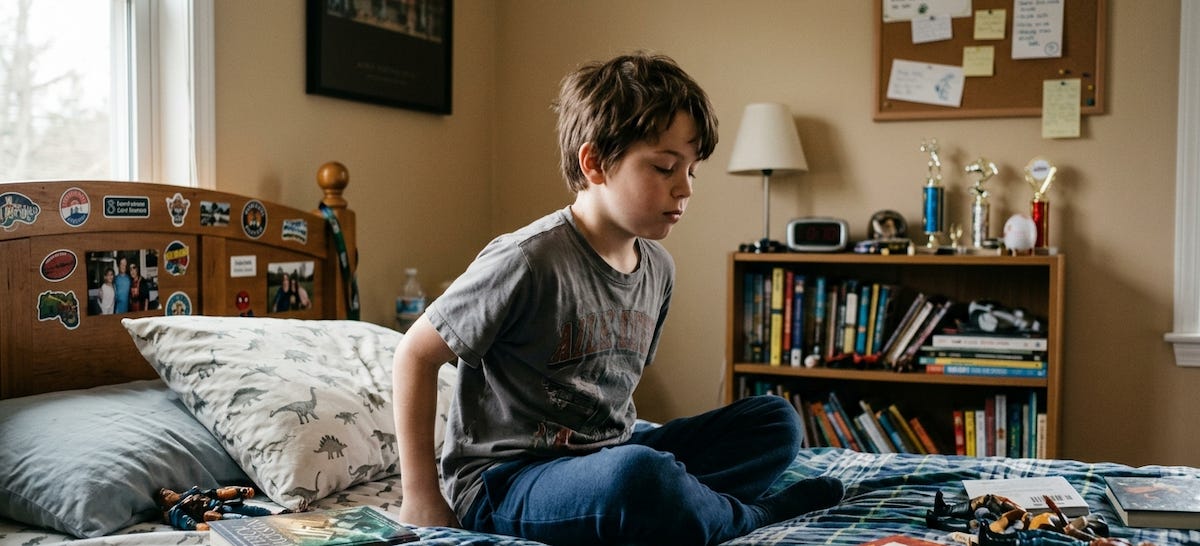
We’ve all experienced it!
The child who comes home from school and immediately starts spinning in circles, flopping onto the sofa, or perhaps—as I did as a boy—disappearing to their room to rock rhythmically for ten minutes on their bed.
As a parent, your first instinct is to tell them to “settle petal”, “find a calm charm”, or “take a chill pill”.
This approach so often misses the mark. Their movement continues, or it transforms into a petty argument.
Good intentions, but a lack of understanding results in an incorrect strategy.
In most cases, this movement isn’t a sign of hyperactivity but rather a brilliant, self-taught coping strategy.
I’ll explain.
Move beyond the five senses
You know about sight, smell, touch, taste, and hearing. You heard about these senses in primary/elementary school.
But there is a hidden sixth sense that is arguably the most important for a child’s emotional well-being: The Vestibular System.
And it wasn’t something you were taught at school. And your parents wouldn’t have known about it either.
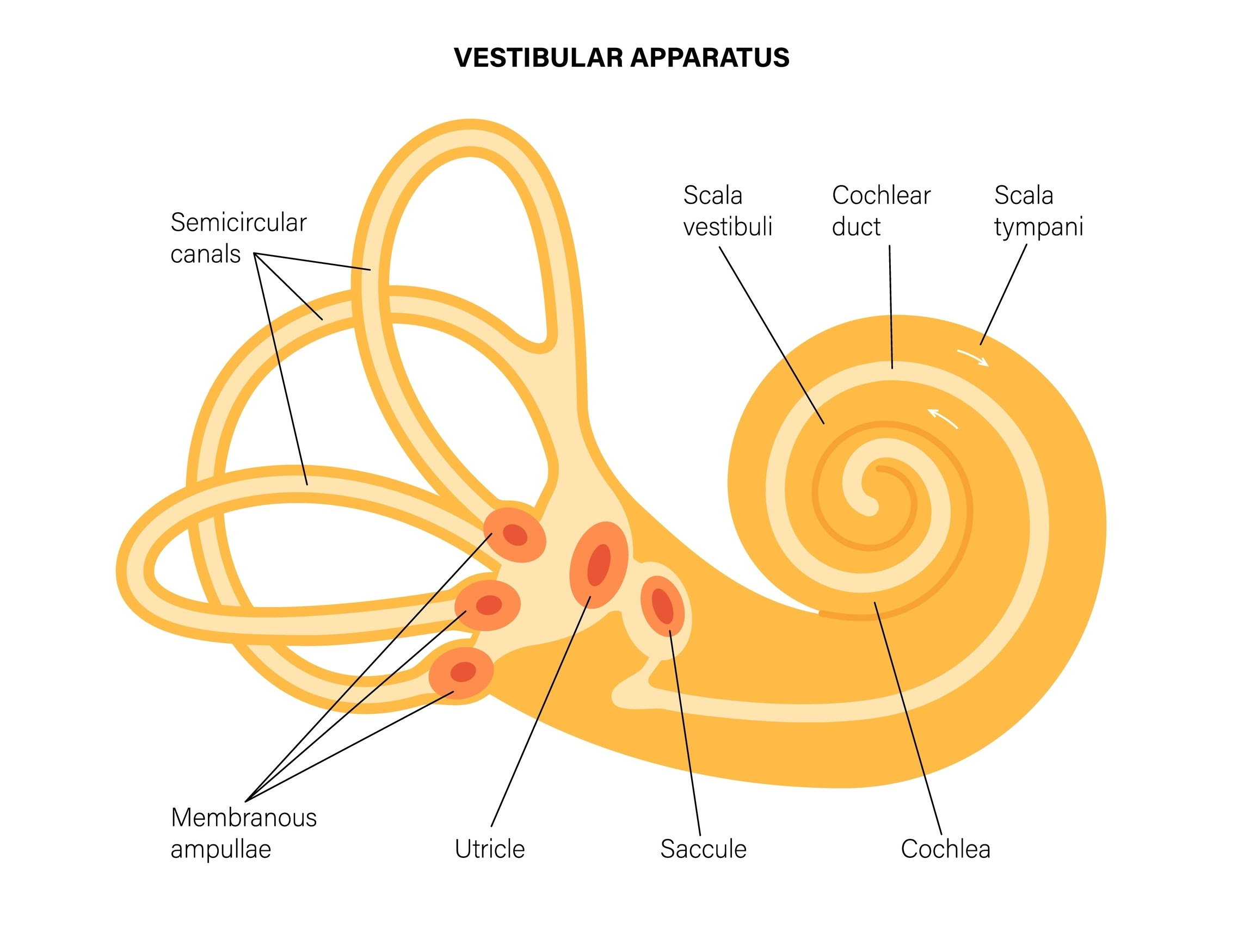
Tucked away in the inner ear, the vestibular system is your child’s internal spirit level.
It senses gravity and movement, telling the brain where the body is in space.
More importantly, it is directly hard-wired to the nervous system.
When the world feels too loud, too fast, or too demanding, the vestibular system is the volume knob that can turn the stress down.
How do kids turn the volume down?
Through movement….but not just any kind.
Remove the school day static
Modern childhood is high-pressure.
Between the sensory overload of a noisy classroom and the mental effort of behaving well and focusing all day, children often leave school with their brains full of static.
When a child rocks, swings, or paces, they are using rhythmic movement to:
Lower their heart rate: Slow, repetitive motion acts like a natural sedative for the brain.
Filter the noise: It helps them tune out the world and tune in to their own bodies.
Reset their clock: It’s a transition ritual that says, “The school day is over; I am safe at home now.”
Rhythmic movement is the key to turning the volume down and removing the day's static. It provides instant and natural stress relief.
Build your child’s agency through self-regulation
One of the best gifts to give a child is agency—the sense that they have the power to influence their own lives and emotions.
Recognise that fidgeting or rocking (common forms of stimming) is actually a child’s way of managing their own stress.
Stop seeing it as a behaviour to be controlled and start seeing it as a competence.
By allowing them space for these movements, you teach them: “You know what your body needs. You have the tools to make yourself feel better.”
Try these simple strategies at home
You don’t need a gym, a course or fancy equipment to help your child use their vestibular system to de-stress.
Here are three simple resets for a pressured day:
1. The 10-Minute Cocoon
If your child is prone to meltdowns after school, give them permission for 10 minutes of rhythmic time.
This might be on a swing, a rocking chair, or simply rocking to and fro on their bed.
No screens, no questions—just movement.
2. Get those big limbs working
If your child seems anxious, give them something to push or pull.
Carrying a basket of laundry or doing wall pushes (pushing against a wall as hard as they can) provides deep pressure that works alongside the vestibular system to ground them.
Jumping on a trampoline, swimming a few laps of the pool, or doing some intense sports practice also does the trick.
3. Go for a walk
Never underestimate the power of a rhythmic, steady walk.
The left-right-left walking rhythm is one of the most effective ways for people of any age to deal with a stressful day.
For many kids, walking home from school is enough to remove the stress of their day. That’s a luxury that not every child enjoys.
Final thoughts
The next time you see your child moving in a way that seems pointless or repetitive, take a breath.
They aren’t being difficult; they are likely doing exactly what they need to do to find their centre and reset.
When you understand the why behind the movement, you can stop managing behaviours and start raising children who are the masters of their own calm.
And you’re giving them the advantage of agency over their lives.
Do you know a parent, teacher or coach who would benefit from this article? If so, sharing is easy.