

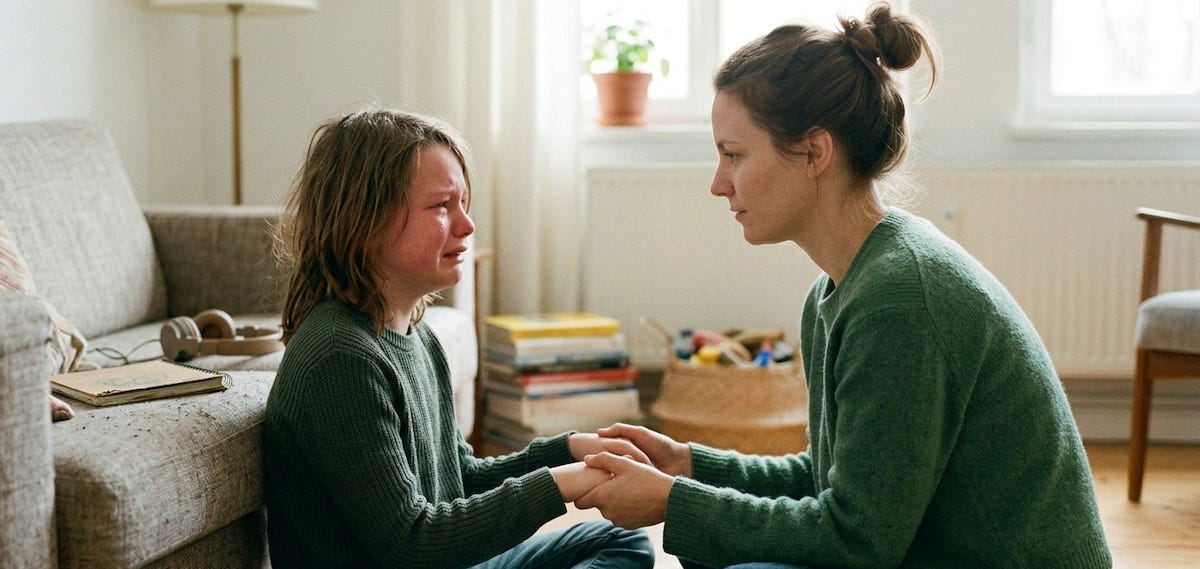
Of all the tools in a parent’s toolbox, there is one that stands taller than the rest.
It isn’t the ability to craft a perfect consequence, nor is it the knack for persuasive storytelling.
The skill I admire most—and the one that serves as the bedrock for all effective guidance—is composure.
In the heat of a child or family meltdown, composure is the circuit breaker.
Why Composure is A Parent’s Best Friend
Parents always achieve better results when they exert a steady influence rather than unnecessary pressure.
In a family context, composure is your greatest source of influence.
When a child is spiralling into a tantrum or a teenager is testing a boundary with red-hot intensity, they are looking for a steady point of reference.
If you meet their big emotions with high-volume reactions of your own, you give your child control over your emotions.
And yes, they’ll press those buttons as hard as they can.
But by maintaining your composure, you retain the lead.
You show them that while their feelings are big, they are not big enough to break the adult in the room.
Understand the Mechanics of a Calm Brain
Composure is not the absence of feeling; it is the mastery of it.
It’s a form of parental self-discipline that prioritises long-term relationships over the short-term impulse to win an argument, or not let your child get the better of you.
Parents who can maintain their composure adopt a leadership mindset. They know that the leader in any group is not the loudest, noisiest or brashest person, but the calmest and most composed.
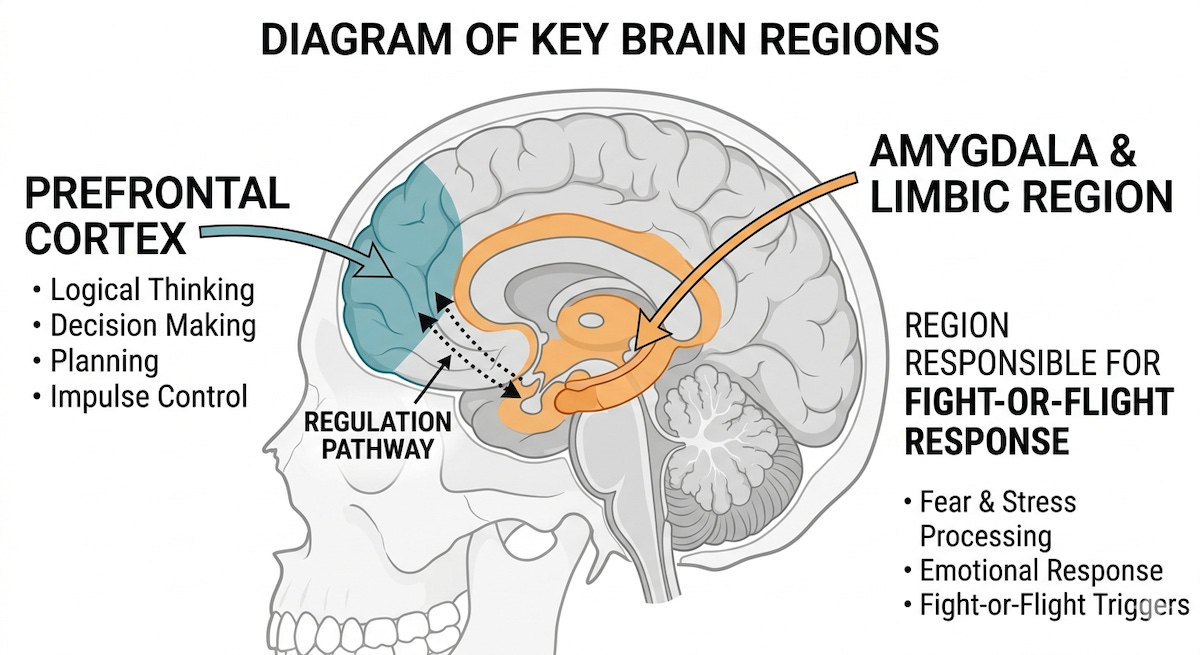
When you stay calm, you operate from your prefrontal cortex - the logical, rational part of your brain.
This allows you to use emotion coaching, where you acknowledge your child’s frustration (”I can see you’re really upset that we have to leave”) without getting sucked into the vortex of the conflict or their upset.
When you lose composure, you operate from your limbic region, that part of your brain responsible for the fight-or-flight response.
And that’s when your rational thinking goes out the window (along with your dignity and empathy for your child’s plight)
There’s only one part of the brain to engage when you want composure - the pre-frontal cortex.
.
The Building Blocks of a Composed Response
Developing this level of restraint doesn’t happen overnight.
It requires a commitment to a few core concepts and skills:
The Pause: One of the most powerful tools in parenting is the three-second gap between a child’s provocation and your response. This pause is where composure resides. Develop the habit of stopping, looking away and taking a few deep breaths before responding to a child’s provocation. Practise this in non-stress situations.
The Leaders’ Mindset: Instead of seeing a child’s behaviour as a personal attack, see it as a lack of skill. This shift in perspective makes it much easier to stay calm and helpful.
Positive Discipline: Composure allows you to be firm and kind at the same time. You can enforce a boundary without the side-serving of anger that often causes children to shut down or rebel.
Model for the Future
You are your children’s primary social teacher.
If you want them to handle stress with grace and composure, they need to see what that looks like in practice.
When you choose composure over impulsivity, you don’t merely solve a problem in the moment; you provide a blueprint for your child’s future resilience.
You teach them that power doesn’t come from who can shout the loudest, but from who can remain the steadiest.
Yes, it can be hard to maintain composure under pressure, especially when you're tired and stressed.
But composure takes practice, so it becomes your default response when the you-know-what hits the fan.
Finally…
Great parenting is rarely about being perfect.
It’s about doing the little things consistently well.
Next time the tension rises in your household, take a breath and remember: your composure is the greatest gift you can give your child in that moment.
It’s the silent signal that says, “I’ve got this, and I’ve got you.”
That’s exactly what your child needs when the heat is on.