

The natural instinct for most parents is to curate children’s lives.
That is, smooth their path, clear the hurdles, and do everything for them, ensuring they don’t experience hardship and difficulty.
The common thinking behind this parenting style is that by protecting and over-serving kids, we preserve their confidence and self-esteem.
But the opposite is true.
Constant protection from the realities of life breeds fragility that shatters the moment life becomes real.
Fortunately, there is an effective, evidence-based way to build child confidence regardless of the circumstances.
The shift involves moving away from external protection and overdoing it for kids, and focusing on building a deep, internal sense of belonging.
Focus on Belonging through Contribution
Alfred Adler, a key founder of modern psychology, argued that a child’s confidence isn’t rooted in being told they’re special, but in feeling useful.
When a child feels they truly belong to a group—whether it’s a family, a classroom, or a sports team—they develop a strong psychological safety net.
And how to create a strong sense of belonging?
As Adler said, belonging is best cultivated through contribution, which is the essence of lasting confidence and happiness.
When you give children real responsibilities, you send a powerful message: “I need you. You have something of value to offer.”
And how they belong in their families sets the pattern for how they belong in all their various groups throughout their lives.
Three Practical Ways to Build Confidence
Parenting shelves bulge with tomes about building confidence in children.
I'll save you some reading time.
Here are, hands down, the three best principles for building lasting confidence in kids.
1. Never do for a child what a child is capable of doing for themselves
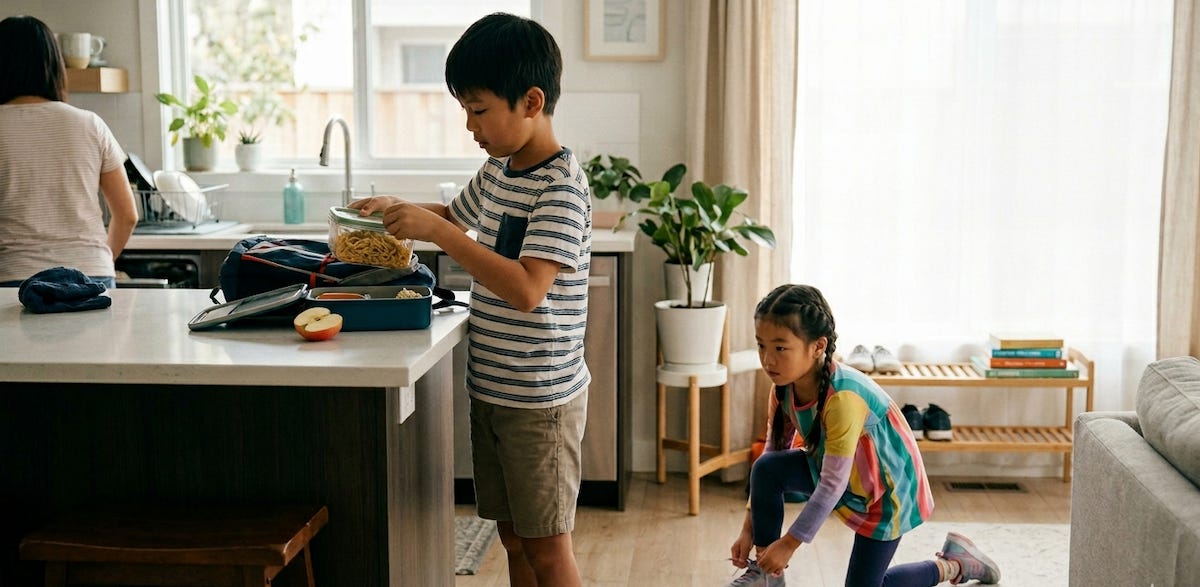
Do you do the ordinary things of life for children that they can do for themselves? (Get their breakfast? Get them out of bed? Unpack their school bags each day?)
It’s easy to fall for the trap of doing things for children that they can do for themselves.
Let’s face it, it’s often simpler, faster and less challenging to do things for kids - especially when you’re time-poor, and your kids drag their feet.
Every time we over-service a child, we inadvertently whisper that they are incapable.
Start stepping back.
Let them manage their own morning routine or pack their own bag.
The message should be: “I’m here if you’re stuck, but I know you’ve got this.”
2. Expect kids to contribute without being paid
Here’s a question I ask every child I work with. “What do you do in your family that someone else relies on?”
Unfortunately, this question is often met with a shrug.
If your child would answer this question with a similar shrug, perhaps it’s time to involve them in the household business and shift some responsibility their way.
Whether it’s help with meal planning, gardening, or basic maintenance, these acts of service create a sense of ownership.
And yes, that extends to chores. It’s their family, not just yours, so let them belong by making a regular contribution that matters.
And chores matter.
A child who contributes to the household is a stakeholder, not a guest.
This stakeholder mindset is the bedrock of contribution.
3. Let your kids experience HFDs-hardships, frustrations and difficulties.
In a perfect world, your child will navigate friendships with ease, win every game they play and handle homework with aplomb.
But… the world doesn’t work that way.
At least, not the world you and I inhabit.
The best way I know to prepare kids for the real world, where hardship, frustration and difficulty live, is to build their resourcefulness and adaptability.
Start this process by ignoring the natural urge to fix every social slight or minor disappointment, acknowledging their feelings, and giving them the space to resolve their own problems.
This moves the child from a victim state to a state of agency- a state when they have some control over their own lives.
It reinforces the idea that while they can’t control what happens to them, they have total control over how they respond.
Finally….
Confidence isn’t a personality trait; it’s a muscle developed through use.
We can’t always be there to catch our children when they fall, but we can provide them with the internal strength that comes from knowing they are a vital, contributing part of something bigger than themselves.
When a child feels a true sense of belonging, they don’t just survive setbacks—they learn from them.
Their confidence is supported by their competence, providing them with a lasting sense of control over their lives.